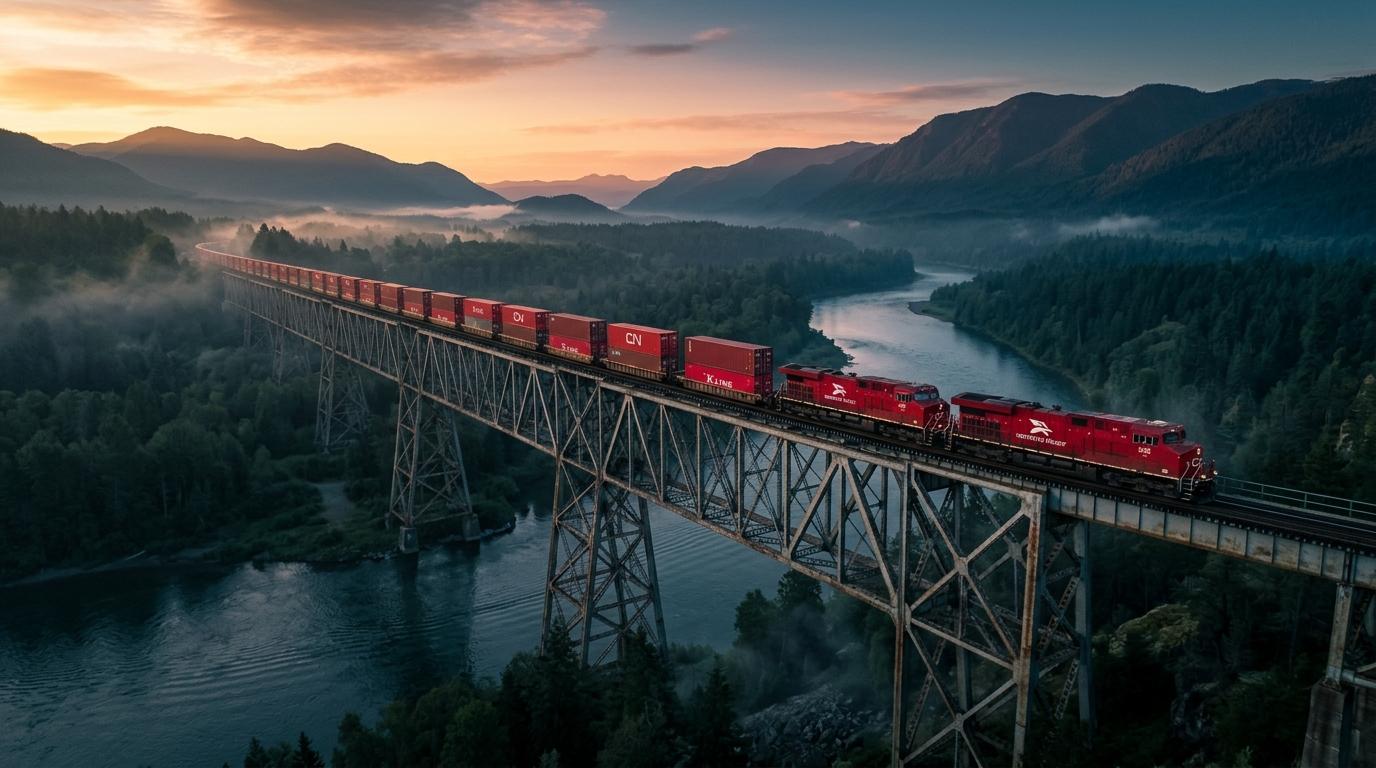
INTERMODAL RAIL
TRANSCONTINENTAL DOUBLE STACK RAIL LOOPS LOWERING FREIGHT EMISSIONS BY 75 PERCENT
RILFREIGHT intermodal rail solutions combine the cost efficiency and environmental sustainability of heavy rail with the flexible reach of regional road networks. Our scheduled unit trains connect major marine container terminals directly with inland industrial corridors.
By eliminating highway congestion and delivering four times the fuel efficiency of long distance trucking, our double stack rail services provide high capacity carriage for bulk manufacturers and retail distribution networks.
Lower Carbon Emissions
— Substantial greenhouse gas reduction compared to long distance highway transport.
Trainload Capacity
— High capacity unit freight trains moving hundreds of double stacked intermodal containers per run.
Inland Terminals
— Direct connectivity between coastal maritime berths and interior distribution hubs.
Mainline Precision
— Protected transcontinental rail paths maintaining consistent delivery schedules across all seasons.
HIGH VOLUME INTERMODAL CONTAINER AND FLATCAR LOGISTICS
Engineered for large volume manufacturers seeking sustainable overland freight transport without sacrificing transit reliability.
Double Stack Container Corridors
High capacity well cars designed to transport stacked 20 foot, 40 foot, and 53 foot containers across transcontinental routes.
On Dock Marine Rail Terminals
Direct transfer from container ship berths straight to rail flatcars, eliminating interim road drayage and terminal congestion.
Heavy Industrial Rail Flatcars
Heavy duty depressed center flatcars capable of transporting massive structural steel, transformers, and industrial equipment.
Automated Cross Border Portals
High speed electronic customs scanning systems enabling unit trains to cross international boundaries with zero manual dwell.
Classification Yard Assembly
Automated rail yard humping and computer controlled train block assembly maximizing freight throughput velocity.
Solar Telemetry on Railcars
Solar powered satellite tracking units mounted to railcars providing continuous geolocation and impact telemetry.
FOUR STAGE OVERLAND RAIL TRANSIT PROCESS
A systematic process ensuring smooth container flow from industrial origin to inland rail terminal delivery.
Container Ramp Gate In & Chassis Lock
Intermodal container arrival at rail terminal, chassis twist lock verification, and railcar well placement.
Train Formation & Mainline Departure
Locomotive coupling, automated air brake pressure testing, and scheduled departure onto mainline tracks.
Transcontinental Corridor Line Haul
High volume overland transit with solar satellite tracking and automated passing siding prioritization.
Inland Terminal Gantry Lift & Delivery
Electric gantry offloading to destination drayage chassis and local final mile facility delivery.
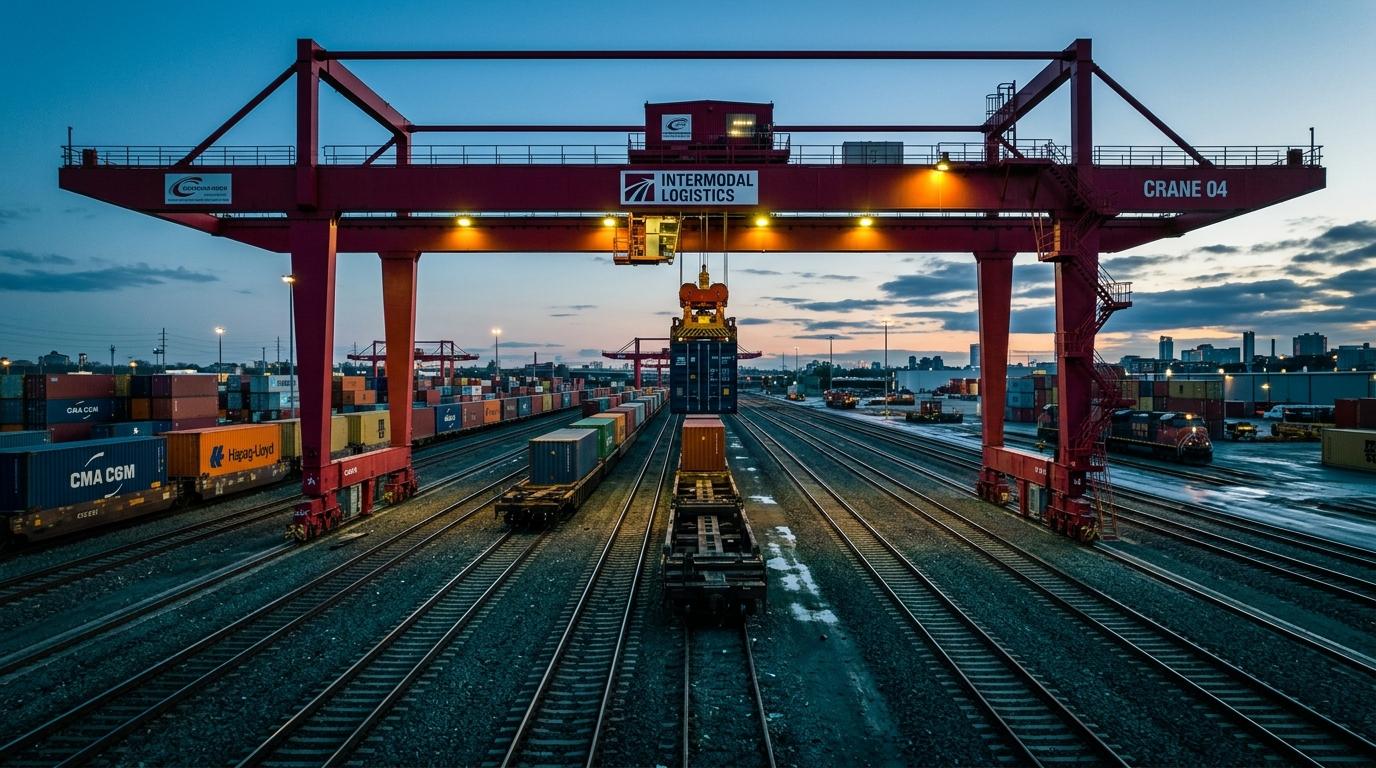
SUSTAINABLE HEAVY FREIGHT CAPACITY POWERING CONTINENTAL COMMERCE
Lowering supply chain carbon footprints while expanding bulk volume carriage.
FREQUENTLY ASKED QUESTIONS ABOUT INTERMODAL RAIL
Practical answers concerning transit velocity, container gross weight limits, and carbon reduction documentation.
Across distances exceeding 750 miles, intermodal rail provides competitive delivery times often within 24 hours of solo highway trucking, while delivering substantial cost savings and significant fuel efficiency.
Standard intermodal well cars accommodate container gross weights up to 67,200 pounds for 40 foot and 53 foot equipment, allowing higher payload capacity compared to statutory highway weight limits in many jurisdictions.
Double stack well cars physically block bottom container doors from opening during transit. In addition, our containers utilize high security bolt seals and optional solar satellite geofence sensors that detect unauthorized door openings.
Yes. Every rail shipment is tracked with precise ton-mile emissions data, generating certified greenhouse gas reduction certificates that verify carbon savings achieved versus equivalent highway trucking.
OPTIMIZE YOUR BULK CARGO LOGISTICS WITH SUSTAINABLE RAIL FREIGHT
Consult our intermodal rail engineers to map volume corridors, coordinate on dock rail transfers, and reduce freight transport expenses.